
NYC remodeling contractor specializing in high-end kitchen, bathroom, and apartment renovations across New York City.
Manhattan Remodeling Contractor for Co-ops, Condos, Lofts and Townhouses
Renovating Homes in Manhattan Since 1997
Gurri Remodel is a licensed New York City remodeling contractor that has been renovating homes since 1997. Our Manhattan office is at 150 East 58th Street, and from there we run kitchen, bathroom and full apartment renovations across the borough, from pre-war co-ops on the Upper East Side to loft buildings downtown.
Manhattan is a different place to build than almost anywhere else. Most homes are apartments inside buildings that have their own rules, their own staff and their own calendar. A renovation here is planned around a board package, insurance certificates, a freight elevator booking and the neighbors on the other side of the wall, as much as around cabinets and tile. This page explains how that works and links to the Manhattan neighborhoods where we have dedicated pages.
We are builders, not interior designers. Many clients come to us with an architect or interior designer already on the project, and we build from their drawings. Others start with us and bring a designer in later. Either way, we handle construction, coordination with the building and the trades, and the contractor side of approvals.

Manhattan Housing: Pre-War Co-ops, Condos, Lofts and Townhouses
Pre-war co-ops. Many of Manhattan’s most sought-after apartments are in co-op buildings put up before World War II, a large number of them in the 1910s and 1920s along Park Avenue, Fifth Avenue, West End Avenue and Riverside Drive. They have plaster walls, high ceilings, solid masonry and plumbing risers that were never meant to move. Renovating one well means keeping the original layout and detail where they matter and bringing wiring, plumbing and ventilation up to date behind them. See our pre-war apartment renovation and co-op renovation pages.
Postwar and new condos. White-brick towers from the 1950s and 1960s and glass condo towers built since the 2000s have concrete slabs, and the older ones often have lower ceilings and tighter limits on what can be cut into. Condo boards usually review less than co-op boards, but most still require an alteration agreement, insurance and drawings. More on condo renovation.
Lofts. In SoHo, Tribeca, NoHo, Chelsea and the Flatiron district, former warehouses and manufacturing buildings were converted into homes. They bring open floor plates, cast-iron columns, timber or steel beams and old masonry walls, along with floors that are rarely level and plumbing that often has to travel a long way to reach a stack.
Townhouses and brownstones. Rowhouses on the side streets of the Upper East and Upper West Sides, Greenwich Village, Chelsea and Harlem are full houses, with stairs, structure, roofs and mechanical systems to plan for. Many sit inside historic districts, which adds Landmarks review to the schedule.
Boards, Permits, Landmarks and Building Rules
Alteration agreements. Nearly every co-op and condo in Manhattan asks for an alteration agreement before work begins. The board or managing agent reviews the plans, often with the building’s own architect or engineer, and asks the contractor for a license, insurance certificates naming the building, a schedule and a description of the work. We prepare that contractor package and answer the building’s questions so review is not held up on our side.
Wet over dry. Many buildings do not allow a kitchen or bathroom to sit above a neighbor’s living room or bedroom. That rule, together with the location of the risers, decides how far a kitchen or bath can move. We check both at the first site visit, with your architect if you have one.
Permits. Work that changes plumbing, gas, electrical or layout usually needs a Department of Buildings filing by a licensed architect or engineer. Cosmetic work often does not. We help sort out which applies early, because it shapes the schedule.
Landmarks. Large parts of Manhattan are in historic districts designated by the Landmarks Preservation Commission, including districts on the Upper East and Upper West Sides and in Greenwich Village, SoHo, Tribeca, NoHo, Chelsea and the Ladies’ Mile area around the Flatiron district. When a project in one of those buildings needs a DOB permit, Landmarks reviews it as well, even if nothing changes on the outside. We prepare the contractor side of that review.
Working in an occupied building. Manhattan buildings set their own work hours, usually weekdays only, and many require the freight elevator to be reserved for every delivery and every debris removal. Some limit major renovation to certain months of the year. Hallways are protected, noise stays within permitted hours, and the superintendent and managing agent always know who is on site. We plan deliveries of cabinets, stone slabs and fixtures around those rules from the start.

Manhattan Neighborhoods We Work In
Each Manhattan neighborhood has its own mix of buildings, and that mix shapes how a renovation is planned. These are the neighborhoods with their own pages, followed by other parts of the borough where we also work.
Upper East Side
Pre-war co-ops on Park, Fifth and Madison Avenues, postwar towers on the avenues farther east and townhouses on the side streets. Boards here review plans and contractors in detail, and parts of the neighborhood are inside historic districts. See bathroom renovation on the Upper East Side and kitchen renovation on the Upper East Side.
Upper West Side
Large pre-war apartment buildings on Central Park West, West End Avenue and Riverside Drive, with classic six and seven layouts, and brownstones on the side streets between them. Many projects open up a closed kitchen or rework an older bathroom within the building’s wet-over-dry rules.
Tribeca
Converted warehouse lofts with brick walls, timber or steel structure and large open floors, alongside newer condo buildings. Plumbing runs and raised floors often decide where a kitchen or bathroom can go. See bathroom renovation in Tribeca and kitchen renovation in Tribeca.
SoHo
Cast-iron loft buildings, many of them co-ops, inside the SoHo-Cast Iron Historic District. Freight elevators, old wood floors and long plumbing runs are part of most projects.
Greenwich Village
Townhouses, walk-up buildings and pre-war co-ops along lower Fifth Avenue and the side streets, much of it within the Greenwich Village Historic District, where interior work that needs a permit also goes to Landmarks.
Chelsea
Rowhouses on the side streets, pre-war co-ops, former industrial buildings converted to lofts and new condos near the High Line, often within a few blocks of each other.
Flatiron
Former commercial loft buildings around Fifth Avenue and Broadway, many converted to full-floor and half-floor apartments, with part of the area inside the Ladies’ Mile Historic District.
Other Manhattan neighborhoods
We also work in Midtown East and Sutton Place, Central Park South, Hudson Yards, Battery Park City and the Financial District, NoHo, Harlem and other parts of the borough. If your neighborhood is not listed, see all the areas we serve or call us at 718-490-1643.
What We Renovate in Manhattan
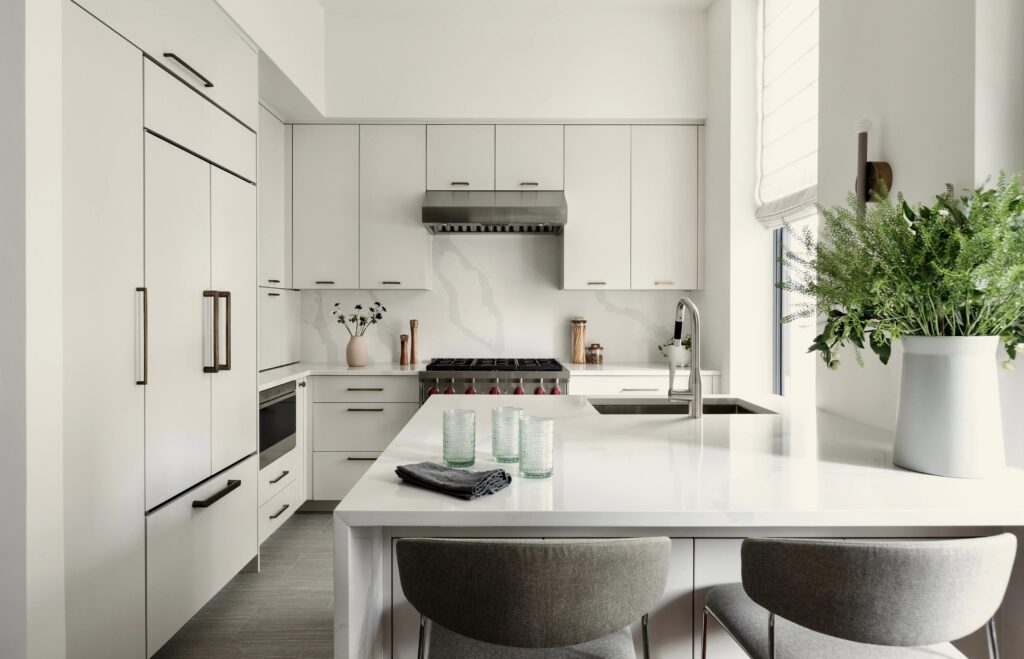
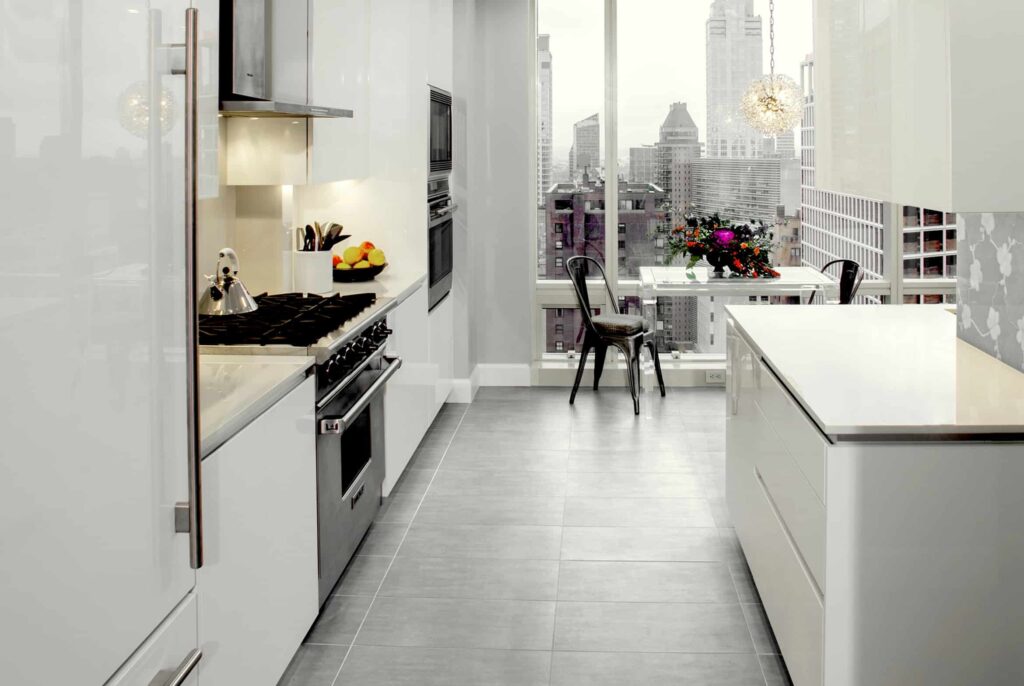
Kitchens. In a pre-war co-op the kitchen is often small and closed off, and the goal is to open it to the living space or make better use of the room it has. Venting a range, adding circuits for modern appliances and keeping plumbing close to the risers are the usual constraints. In a loft or a new condo the space is there, and the work is in the detail: custom millwork, stone counters fabricated and installed by our team, and integrated appliances. More on kitchen remodeling.
Bathrooms. Most Manhattan bathroom renovations replace old supply and waste lines back to the riser, add waterproofing that meets the building’s requirements and make room for a larger shower or a second sink without moving over a neighbor’s dry space. More on bathroom remodeling.
Full apartment and townhouse renovations. A gut renovation brings it all together: electrical work within the building’s capacity, plumbing, heating and cooling, walls and ceilings, flooring, millwork and finishes. In pre-war apartments we also repair and recreate plaster moldings and apply wallpaper and specialty finishes. See apartment renovations and plaster, painting and specialty finishes.
How a project runs. A site visit, a review of drawings and building rules, pricing, approvals, construction and closeout. Each step is described on our process page. Our office is open Monday to Friday 9 to 5 and Saturday 9 to 3, and you can reach us at 718-490-1643 or [email protected].
Manhattan renovation questions
Do I need my building’s approval before work starts?
In a co-op or condo, almost always. The board or managing agent reviews the plans under an alteration agreement and asks the contractor for insurance, a license and a schedule. We prepare the contractor side of that package.
Can a kitchen or bathroom move to another part of my apartment?
Sometimes. It depends on the building’s wet-over-dry rules, the location of the risers, venting and the floor structure. We check all of them on the first site visit.
Does Landmarks review apply to interior work?
If the building is in a historic district and the work needs a Department of Buildings permit, the Landmarks Preservation Commission reviews it too, even when nothing changes outside. Purely cosmetic work usually does not need it.
Do you work with my architect or interior designer?
Yes. Many of our projects are designed by an architect or interior designer and built by our team. We are the builder, not the designer.
Related pages
Discuss Your Project
Start your high-end NYC remodeling project with a trusted general contractor delivering precision, quality, and expert execution.